
IN THIS ISSUE
Community profiles – Indigenous leaders work to protect drinking water and environment from oil sands pollutants
CAREX news – New CCS grant awarded to estimate the burden of skin cancer from workplace sun exposure
Recent publications – Young workers’ perceptions on carcinogens, artificial light at night, and low-dose ionizing radiation
Partner updates – Evict Radon’s toenail study and newly released Canadian Cancer Statistics
COMMUNITY PROFILES
Indigenous leaders work to protect drinking water and environment from oil sands pollutants
As a part of our ongoing commitment to Indigeneity, Equity, Diversity, and Inclusion (IEDI), the “Community Profiles” section of our newsletter is devoted to uplifting and raising the profile of communities that may be at greater risk of exposure to carcinogens, or who have recently made progress in finding solutions to combat exposures.
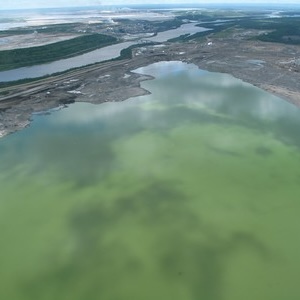
Indigenous leaders in Alberta are still waiting on the federal government to introduce and pass legislation affirming that First Nations have a human right to clean drinking water, nearly eight months after the pledge was made by the government. This November, Mikisew Cree First Nation Chief Billy-Joe Tuccaro and Treaty 8 First Nations of Alberta Grand Chief Trevor Mercredi called for a halt to the “treat and release” plan for the Alberta oil sands tailings ponds, citing concerns about the downstream impacts to surface water, groundwater and wildlife. They are urging both federal and provincial governments to pause treat and release plans until research into the technical feasibility of proposed mitigation measures are completed.
The Athabasca oil sands are a source of highly toxic pollutants that negatively impact human and environmental health. Polycyclic aromatic hydrocarbons (PAHs), which are chemical by-products from petroleum production and processing, have been found in sediments and snowpacks near oil sands operations. Exposure to these chemicals can occur via contaminated air, food, and water, and are linked to various adverse health effects in humans including lung and skin cancers.
In 2024, the federal government announced support for an investigation through the community-led Fort Chipewyan Health Study, which will provide a comprehensive understanding of the impacts of the oil sands on the health of nearby communities. However, this study has just begun and, according to a group of doctors and water rights experts, has not yet yielded the evidence required to support the release of the oil sands tailings ponds. Indigenous leaders representing nations in territories that overlap with the Athabasca oil sands deposits continue their work to ensure a safe environment through provincial steering committees, Crown-Indigenous working groups, and public calls-to-action.

CAREX NEWS
New CCS grant awarded to estimate the burden of skin cancer from workplace sun exposure
CAREX Canada researchers and collaborators, led by Principal Investigator Dr. Cheryl Peters, were recently awarded funding from the Canadian Cancer Society (CCS) to estimate the burden of occupational skin cancer from solar radiation exposure. Approximately 1.7 million Canadians are exposed to sun at work, and outdoor workers have a 2.5 to 3.5 times greater risk of skin cancer than indoor workers. With this support from the CCS Workplace Cancer Research Grant, the research team will improve the methods for counting occupational skin cancers, update the estimates of how many of these cancers are likely to be caused by workplace sun exposure, and calculate the current economic burden of occupational skin cancer from outdoor work. The results of this study will improve our understanding of workplace skin cancer in Canada and how it is estimated, as well as inform actions to reduce sun exposure at work.
Learn more about our project and the other CCS Workplace Cancer Research Grant recipients here.

RECENT PUBLICATIONS
Young workers’ perceptions on carcinogens, artificial light at night, and low-dose ionizing radiation
Members of our team recently published journal articles on CAREX-related research, including:
- An assessment of young workers’ perceptions about occupational carcinogens, which found that the ability to identify carcinogens was low and there were knowledge gaps about workplace hazards that indicate a need for improved training among young workers.
- An evaluation of artificial light at night measures with breast cancer risk, which suggests that both intensity and wavelength of light should be considered when assessing exposures.
- An investigation into low-dose ionizing radiation exposure and cancer incidence among Canadian nuclear power plant workers, which concludes that exposure at low doses increases the risk of prostate cancer and melanoma.
A full list of our publications is available here.

PARTNER UPDATES
Evict Radon National Study’s toenail study and newly released Canadian Cancer Statistics
The research team at the Evict Radon National Study recently released a pilot study showing how long-term radon exposure can be measured from radon decay products accumulated in human toenails. This indicator could help assess non-tobacco lung cancer risk and expand access to early lung cancer screening. As part of this work, their team is currently recruiting participants for two innovative research projects: the Radon Toenail Study and the Radon Disability Study. These studies explore how radon decay products can build up in the body over time and whether certain populations, such as people experiencing disabilities, may face greater risks. If you are interested in participating in these studies, fill out their eligibility survey here.
The Canadian Cancer Society (CCS) has released their 2025 Canadian Cancer Statistics publication, which provides projected estimates of new cancer cases and deaths by sex, age, and geographic region for over 20 cancer types. An estimated 254,800 new cancer cases are expected in 2025, with lung, breast, prostate, and colorectal cancers accounting for approximately 48% of all cancers diagnosed this year. The report highlights the need for an increased focus on primary prevention efforts that minimize the risk for developing cancers, which includes reducing exposure to priority carcinogens like sun, radon, and air pollution. The report is available here.
Please note that the CAREX Canada e-Bulletin is now a bi-annual digest. For more regular communications from us, please subscribe to Carcinogens in the News, a monthly digest of media articles, government reports, and academic literature related to the carcinogens we’ve classified as important for surveillance in Canada.
Subscribe to our newsletters
The CAREX Canada team offers two regular newsletters: the biannual e-Bulletin summarizing information on upcoming webinars, new publications, and updates to estimates and tools; and the monthly Carcinogens in the News, a digest of media articles, government reports, and academic literature related to the carcinogens we’ve classified as important for surveillance in Canada. Sign up for one or both of these newsletters below.
CAREX Canada
School of Population and Public Health
University of British Columbia
Vancouver Campus
370A - 2206 East Mall
Vancouver, BC V6T 1Z3
CANADA


As a national organization, our work extends across borders into many Indigenous lands throughout Canada. We gratefully acknowledge that our host institution, the University of British Columbia Point Grey campus, is located on the traditional, ancestral, and unceded territories of the xʷməθkʷəy̓əm (Musqueam) people.