
Carbon Black Profile
INDUSTRIAL CHEMICALS – POSSIBLE CARCINOGEN (IARC 2B)
Contents
Carbon Black Profile
General Information
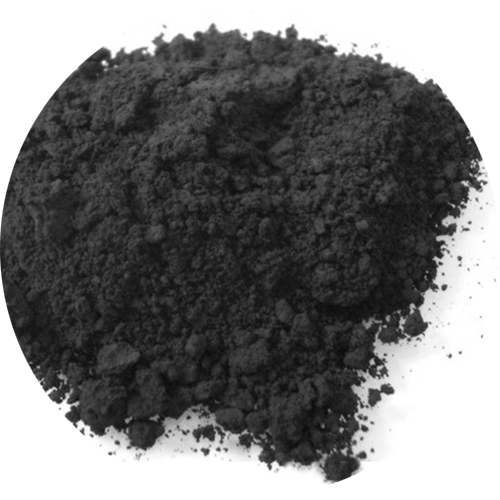
Carbon black is essentially made of elemental carbon.[1] Composed of aggregated carbon particles arranged in chains, it has a large surface area capable of absorbing fluids and reinforcing materials.[2] Various types of carbon black are manufactured in powder or pellet form; all are insoluble in water and organic solvents, and vary in particle size, surface area per unit mass, and aggregate size.[1,2] Other names for carbon black include acetylene black, channel black, furnace black, lampblack, or thermal black. There are numerous other synonyms and product names; see the Hazardous Substances Data Bank (HSDB) for more information.[3]
Carbon black is classified by the International Agency for Research on Cancer (IARC) as Group 2B, possibly carcinogenic to humans. This classification is based on evidence from animal studies showing that inhalation of carbon black significantly increases the incidence of benign and malignant lung tumours.[1] In humans, excess risk of lung cancer was found in some epidemiological studies, however a dose-response relationship between lung cancer and carbon black exposure has not been clearly identified.[1] Isolated epidemiological results indicate potential excess risks of urinary, bladder, kidney, stomach, and esophageal cancers following exposure to carbon black.[1]
Acute respiratory effects following exposure to carbon black include cough, sputum production, and shortness of breath. Potential chronic effects include reduced lung function, emphysema, chronic bronchitis, and fibrosis.[4] Carbon black “tattoos” may result when carbon black particles become embedded in the skin and cause discolouration.[4]
Regulations and Guidelines
Occupational exposure limits (OEL) [5,6,7,8,9,10,11,12,13,14,15,16,17,18,19]
| Canadian Jurisdictions | OEL (mg/m3) |
|---|---|
| Canada Labour Code | 3 [i] |
| AB, NB, QC | 3.5 |
| BC, MB, NL, NS, ON, PE | 3 [i] |
| NT, NU, SK, YT | 3.5 7 [stel] |
| Other Jurisdictions | OEL (mg/m3) |
| ACGIH 2020 TLV | 3 [i] |
mg/m3 = milligrams per cubic metre
i = inhalable particulate matter
stel = short term exposure limit (15 min. maximum)
ACGIH = American Conference of Governmental Industrial Hygienists
TLV = threshold limit value
Canadian environmental guidelines and standards*
| Jurisdiction | Limit | Year |
|---|---|---|
| Ontario Ambient Air Quality Criteria | **24 hour: 10 µg/m3 | 2016[20] |
| Ontario’s Air Pollution – Local Air Quality Regulation | 24 hour standard: 10 µg/m3; Prohibited discharge into the air if the concentration of carbon black exceeds the standard | 2020[21] |
| PMRA List of Formulants | List 4B. List 4B contains formulants, some of which may be toxic, for which there are sufficient data to reasonably conclude that the specific use pattern of the pest control product will not adversely affect public health and the environment. | 2020[22] |
| List of Permitted Food Additives | Permitted for use as a colouring agent | 2017[23] |
*Standards are legislated and legally enforceable, while guidelines (including Ontario ambient air quality criteria) describe concentrations of contaminants in the environment (e.g. air, water) that are protective against adverse health, environmental, or aesthetic (e.g. odour) effects
**protection from soiling
µg/m3 = micrograms per cubic metre
PMRA = Pest Management Regulatory Agency
Canadian agencies/organizations
| Agency | Designation/Position | Year |
|---|---|---|
| Health Canada | DSL – high priority substance with greatest potential for exposure | 2006[24] |
| CMP Challenge | Batch 12 | 1999[25] |
DSL = domestic substance list
CMP = Chemicals Management Plan
Carbon black was not included in other Canadian government guidelines, standards, or chemical listings reviewed.
Environmental Exposures Overview
As of 2013, Canadian monitoring data for carbon black in air, water, soil, or sediment could not be located.[28] Carbon black is emitted into the air by carbon black manufacturers, but modern production plants generally use filters to reduce emissions to under 50 mg/m3.[2] Environmental exposures are considered to be greatest near industrial areas that manufacture carbon black. Exposures may occur through inhalation during the use of consumer products that contain carbon black, such as paints and spray hair dyes. However, since carbon black particles are bound within consumer product materials, exposure from the use of these products is likely limited.[28] Dermal exposure to carbon black from cosmetic products is also unlikely to occur due to the insolubility of carbon black in water, bodily fluids, and organic solvents.[28] Exposure may also occur through carbon black’s use in food additives and food packaging, but are likely low.[29]
Release of carbon black is not reportable to the National Pollutant Release Inventory (NPRI) in Canada.[30] A search of a consumer product database yielded the following results:
US Consumer Product Information Database
| US Consumer Products 2016[31] | ||
|---|---|---|
| Search Term | Quantity | Product Type |
| ‘carbon black’ | >100 | Auto paints and primers, gasket makers, shoe polish, printer toners and inks, wood finishers, urethane patch kits |
Occupational Exposures Overview
Inhalation is the most important route of occupational exposure to carbon black.[32]
The highest levels of exposure occur in occupations involved in producing carbon black, particularly packers and site cleaners.[1] Occupational exposure may also occur in the rubber industry, mainly in compounding and mixing areas, and in other user industries such as painting and printing.[1]
CAREX Canada has not prioritized carbon black for exposure estimate development. This is because there is a lack of exposure monitoring data in the Canadian Workplace Exposure Database on which to base an estimate.
Sources
Subscribe to our newsletters
The CAREX Canada team offers two regular newsletters: the biannual e-Bulletin summarizing information on upcoming webinars, new publications, and updates to estimates and tools; and the monthly Carcinogens in the News, a digest of media articles, government reports, and academic literature related to the carcinogens we’ve classified as important for surveillance in Canada. Sign up for one or both of these newsletters below.
CAREX Canada
School of Population and Public Health
University of British Columbia
Vancouver Campus
370A - 2206 East Mall
Vancouver, BC V6T 1Z3
CANADA


As a national organization, our work extends across borders into many Indigenous lands throughout Canada. We gratefully acknowledge that our host institution, the University of British Columbia Point Grey campus, is located on the traditional, ancestral, and unceded territories of the xʷməθkʷəy̓əm (Musqueam) people.