
Chromium (Hexavalent) Profile
METALS – KNOWN CARCINOGEN (IARC 1)
Contents
Chromium (Hexavalent) Profile
QUICK SUMMARY
- A naturally occurring element in the earth’s crust, and a product of industrial processes
- Associated cancer: Lung cancer
- Most important routes of exposure: Inhalation, skin contact
- Uses: Found in stainless steel and other alloys, pigments, wood preservatives, and leather tanning and metal finishing (chrome plating)
- Occupational exposures: Approx. 85,000 Canadians are exposed at work, primarily welders and printing press operators
- Environmental exposures: Found in indoor and outdoor air, soil, surface water, and groundwater
- Fast fact: Canada has not mined chromium ores since the early 1900s, although there are deposits across the country
General Information
Chromium is a naturally occurring element in the earth’s crust.[1] It has a number of different valence states, but typically occurs in its trivalent (chromium [III]) and hexavalent (chromium [VI]) forms.[1] Chromium [VI] compounds are most often products of industrial processes.[2] Common chromium [VI] chemicals include potassium chromate and dichromate, sodium chromate and dichromate, lead chromate, calcium chromate, and chromium trioxide.[2] A number of other hexavalent compounds exist; refer to Hazardous Substances Data Bank (HSDB) for more information.[3]
Hexavalent chromium has been classified by the International Agency for Research on Cancer (IARC) as Group 1, carcinogenic to humans, with a well established link to lung cancer.[4,5] Several epidemiological studies have also found increased risks of cancer in the nasal cavity and paranasal sinuses in workers exposed to chromium [VI],[2,5] and sinonasal cancer among workers engaged in chromate production, chromate pigment production, and chromium plating.[2] Compounds of chromium [III] and metallic chromium were classified as Group 3, not classifiable as to [their] carcinogenicity to humans.[4] This profile will focus on chromium [VI], since it is the known cancer-causing form of chromium.
Acute inhalation exposure to hexavalent chromium may irritate and damage the nose, throat, and lungs.[6] Dermal exposure to chromium [VI] may also cause allergic contact dermatitis and skin sensitization.[6]
Regulations and Guidelines
Occupational exposure limits (OEL) [7,8,9,10,11,12,13,14,15,16,17,18,19,20,21]
| Canadian Jurisdictions | Cr [VI] compound | OEL (mg/m3) |
|---|---|---|
| Canada Labour Code | Water-soluble Cr [VI] compounds Chromyl chlorideTert-butyl chromate Lead chromate, as Cr | 0.0002; 0.0005 [stel, dsen, rsen, i] 0.0001 ppm; 0.00025 ppm [stel, dsen, rsen, ifv] 0.1 [c] 0.0002; 0.0005 [stel, dsen, rsen, i] |
| AB, NB, ON | Water-soluble Cr [VI] compounds Insoluble Cr [VI] compounds Tert-butyl chromate Calcium chromate Chromite ore processing Lead chromate, as Cr Strontium chromate Zinc chromates | 0.05 0.01 0.1 [c, sk] 0.001 0.05 0.012 0.0005 0.01 |
| BC | Water-soluble Cr [VI] compounds Insoluble Cr [VI] compounds Tert-butyl chromate Calcium chromate Chromite ore processing Lead chromate, as Cr Strontium chromate Zinc chromates | 0.025; 0.1 [c] 0.01 0.1 [c, sk] 0.001 0.05 [sk, dsen, rsen] 0.012 [dsen, rsen] 0.0005 [sk, dsen, rsen] 0.01 [sk, dsen, rsen] |
| MB, NL, NS, PE | Water-soluble Cr [VI] compounds Chromyl chlorideTert-butyl chromate Lead chromate, as Cr | 0.0002; 0.0005 [stel, dsen, rsen, i] 0.0001 ppm; 0.00025 ppm [stel, dsen, rsen, ifv] 0.1 [c] 0.0002; 0.0005 [stel, dsen, rsen, i] |
| NT, NU, SK | Water-soluble Cr [VI] compounds Insoluble Cr [VI] compounds Tert-butyl chromate Calcium chromate Lead chromate, as Cr Strontium chromate Zinc chromates | 0.05; 0.15 [stel] 0.01; 0.03 [stel] 0.1 [c, sk] 0.001; 0.003 [stel] 0.012; 0.036 [stel] 0.0005; 0.0015 [stel] 0.01; 0.03 [stel] |
| QC | Water-soluble Cr [VI] compounds Insoluble Cr [VI] compounds Tert-butyl chromate Calcium chromate Chromite ore processing Lead chromate, as Cr Strontium chromate Zinc chromates | 0.05 [sen, em] 0.01 [sen, em] 0.1 [c, sk] 0.001 [em] 0.05 [em] 0.012 [em] 0.0005 [em] 0.01 [sen, em] |
| YT | Tert-butyl chromate Chromic acid and chromate Chromite ore processing Lead chromate, as Cr | 0.1 [c, sk] 0.1; 0.1 [stel] 0.1 0.05 |
| Other Jurisdiction | Cr [VI] compound | OEL (mg/m3) |
| ACGIH 2020 TLV | Water-soluble Cr [VI] compounds Chromyl chlorideTert-butyl chromate Lead chromate, as Cr | 0.0002; 0.0005 [stel, dsen, rsen, i] 0.0001 ppm; 0.00025 ppm [stel, dsen, rsen, ifv] 0.1 [c] 0.0002; 0.0005 [stel, dsen, rsen, i] |
mg/m3 = milligrams per cubic
meterstel = short term exposure limit (15 min. maximum)
dsen = dermal sensitizer
rsen = respiratory sensitizer
ppm = parts per million
i = inhalable fraction
ifv = inhalable fraction and vapour
c = ceiling limit
sk = easily absorbed through the skin
sen = sensitizer
em = exposure must be reduced to the minimum
ACGIH = American Conference of Governmental Industrial Hygienists
TLV = threshold limit value
Canadian environmental guidelines and standards*
| Jurisdiction | Limit | Year |
|---|---|---|
| Drinking Water Guidelines (Canada, BC, MB) and Standards (ON, QC, SK) | 0.05 mg/L (total chromium) | 2003-2020 [22,23,24,25,26,27] |
| BC’s Contaminated Sites Regulation, BC Reg 375/96 | Drinking water standard: 50 μg/L (hexavalent chromium) | 2019[28] |
| Ontario Ambient Air Quality Criteria** | Annual: 0.00007 µg/m3 (Cr in PM10) 24-hour: 0.00035 µg/m3 (Cr in PM10) Annual: 0.00014 µg/m3 (Cr in TSP) 24-hour: 0.0007 µg/m3 (Cr in TSP) | 2016[29] 2012[29] 2012[29] 2012[29] |
| Ontario’s Air Pollution – Local Air Quality Regulation | Annual standard: 0.00014 µg/m3 (hexavalent chromium) | 2020[30] |
| Quebec’s Clean Air Regulation | 1 year limit: 0.004 µg/m3 (total chromium) | 2011[31] |
| Cosmetic Ingredient Hotlist | Not permitted for use | 2015[32] |
*Standards are legislated and legally enforceable, while guidelines (including Ontario ambient air quality criteria) describe concentrations of contaminants in the environment (e.g. air, water) that are protective against adverse health, environmental, or aesthetic (e.g. odour) effects
**Chromium compounds (hexavalent forms) – Applies to pure Cr [VI] species or to the percentage of Cr [VI] species relative to total chromium
mg/L = milligrams per litre
µg/m3 = micrograms per cubic metre
PM10 = particulate matter 10 micrometers or less in diameter
TSP = total suspended particulate
Canadian agencies/organizations
| Agency | Designation/Position | Year |
|---|---|---|
| National Classification System for Contaminated Sites | Rank: “High hazard” | 2008[33] |
| Health Canada | DSL – low priority substance (already risk managed)* | 2006[34] |
| CEPA | Schedule 1, paragraphs ‘a’ and ‘c’ | 2011[35] |
| Environment Canada’s National Pollutant Release Inventory | Reportable to NPRI if manufactured, processed, or otherwise used at quantities greater than 50 kg . Total of the pure element and the equivalent weight of the element contained in any compound, alloy or mixture. | 2016[36] |
DSL = domestic substance list
CEPA = Canadian Environmental Protection Act
*This designation applies to a number of different chromium [VI] compounds, including chromium trioxide and various chromic acid (chromate) compounds.
Hexavalent chromium was not included in other Canadian government guidelines, standards, or chemical listings reviewed.
Main Uses
Hexavalent chromium is used to manufacture stainless steel and other alloys, pigments, and wood preservatives and in leather tanning and metal finishing (chrome plating).[2,6] Chromium [VI] compounds are also used in smaller quantities in printer ink toners, textile dyes, drilling muds, and during water treatment and chemical production.[1,2]
Chromated copper arsenate (CCA) is a widely used wood preservative that contains hexavalent chromium.[37] The use of CCA-treated wood for residential purposes was voluntarily phased out by industry at the end of 2003.[37] Existing residential structures made with CCA-treated wood were not required to be removed. CCA is still used to preserve wood for industrial applications such as utility poles, pilings, and highway construction.[37]
Canadian Production and Trade
Canada has not mined chromium ores since the early 1900s, although there are deposits across the country. There has been recent interest in mining chromite ores in Northern Ontario.[38]
No chromium trioxide was exported from Canada in 2021. However, 26 tonnes and 48 tonnes were exported in 2019 and 2020 respectively.[39]
Production and trade
| Activity | Quantity | Year (ref) |
|---|---|---|
| Export | 0 t (of ‘chromium trioxide’) | 2021[39] |
| Import | 1,451 t of ‘chromium trioxide’ | 2021[39] |
| Export | 0 t of ‘sodium dichromate’ | 2021[39] |
| Import | 884 t of ‘sodium dichromate’ | 2021[39] |
t = tonne
Environmental Exposures Overview
Trace amounts of chromium [VI] occur naturally in unpolluted environments.[1,6] However, most chromium detected in the environment is released from anthropogenic sources.[6] Chromium [VI] is commonly found in indoor and outdoor air, soil, surface water, and groundwater.[6]
Surface water is contaminated with chromium [VI] in many parts of Canada.[1] Total chromium in Canadian drinking water is typically less than 5 µg/L.[1,6] Mean or median total chromium concentrations from rivers and streams in British Columbia, Alberta, Ontario, and Quebec were found to be between 4 – 7 µg/L, with 10 – 60% of the chromium as chromium [VI].[1] Total chromium levels in unpolluted surface water are typically below 1 µg/g. CAREX Canada’s estimates indicate that chromium [VI] levels in drinking water may result in an increased risk of cancer at a population level (moderate data quality).
Average levels of chromium [VI] in air near industrial areas may be 10 – 45 times higher than those in non-industrial areas.[6] CAREX Canada estimates that exposures to chromium [VI] in outdoor air likely do not result in an increased risk of cancer (very low data quality). A data gap (moderate priority) was identified for chromium [IV] in indoor air.
Only monitoring data for total chromium concentration are available for soil. Total chromium levels in soil vary widely from 5 – 1,500 mg/kg, depending on the type of rock from which the soil formed and the presence of nearby industrial activities.[6] Soil near wood preservation plants, which use hexavalent chromium, had 25 times more total chromium content than uncontaminated soil.[1] Chromium [VI] may also leach into surrounding soil via treated wood structures such as building foundations, railroad ties, and decks.[6,37]
Searches of Environment Canada’s National Pollutant Release Inventory (NPRI) yielded the following results on current potential for exposure to hexavalent chromium in Canada:
NPRI reported releases
| NPRI 2015[40] | ||
|---|---|---|
| Search Term: | ‘Hexavalent chromium (and its compounds)’ | |
| Category | Quantity | Industry |
| Released into Environment | 2.36 t | Power generation, pulp and paper, metal plating, various manufacturing, waste treatment (184 facilities) |
| Disposed of | 528 t | |
| Sent to off-site recycling | 97 t | |
t = tonne
For more information, see the environmental exposure estimate for chromium [VI].
Occupational Exposures Overview
Inhalation and dermal contact are the most important routes of occupational exposure to chromium [VI].[2]
CAREX Canada’s estimates indicate that approximately 85,000 Canadians are occupationally exposed to chromium [VI]. Most exposures (87%) occur in the low exposure category. However, many workers are exposed to moderate or high levels of chromium (VI) in fabricated metal products, transportation equipment manufacturing, and machinery manufacturing.
The industries with the largest numbers of exposed workers are automotive maintenance and repair and printing and support activities. Other industries with larger numbers of workers exposed to chromium (VI) include building equipment contractors and commercial and industrial machinery and equipment repair and maintenance.
In terms of occupation, the groups with the largest number of exposures to chromium (VI) are welders (who are exposed when welding stainless steel), printing press operators, construction millwrights and industrial mechanics, and automotive service technicians, truck and bus mechanics, and mechanical repairers.
According to the Burden of Occupational Cancer in Canada project, occupational exposure to chromium (VI) leads to approximately 50 lung cancers, and less than five possible sinonasal cancers each year in Canada, based on past exposures (1961-2001).[41,42] This amounts to 0.2% of all lung cancers and 0.5% of all sinonasal cancers diagnosed annually. Most chromium(VI)-related cancers occur among workers in the manufacturing sector.[42]
For more information, see the occupational exposure estimate for chromium [VI].
Sources
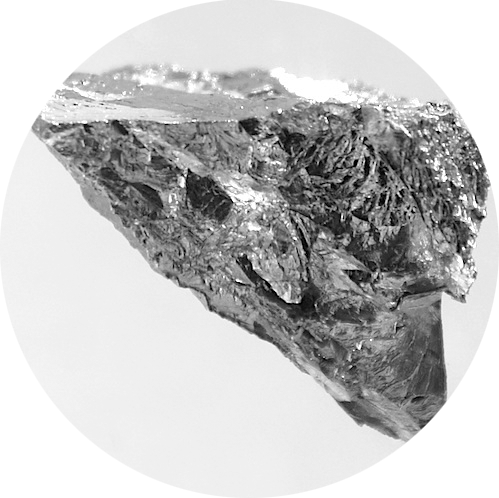
Photo: Wikimedia Commons, Hi-Res Images of Chemical Elements
.jpg)
Other Resources
- Agency for Toxic Substances and Disease Registry (ATSDR). ToxFAQ for Chromium (2008)
- US Environmental Protection Agency (EPA). Health assessment document for Chromium. Research Triangle Park, NC: Environmental (1984)
Subscribe to our newsletters
The CAREX Canada team offers two regular newsletters: the biannual e-Bulletin summarizing information on upcoming webinars, new publications, and updates to estimates and tools; and the monthly Carcinogens in the News, a digest of media articles, government reports, and academic literature related to the carcinogens we’ve classified as important for surveillance in Canada. Sign up for one or both of these newsletters below.
CAREX Canada
School of Population and Public Health
University of British Columbia
Vancouver Campus
370A - 2206 East Mall
Vancouver, BC V6T 1Z3
CANADA


As a national organization, our work extends across borders into many Indigenous lands throughout Canada. We gratefully acknowledge that our host institution, the University of British Columbia Point Grey campus, is located on the traditional, ancestral and unceded territories of the xʷməθkʷəy̓əm (Musqueam) people.