
Arsenic and Arsenic Compounds Profile
METALS – KNOWN CARCINOGEN (IARC 1)
Contents
Arsenic and Arsenic Compounds Profile
QUICK SUMMARY
- A naturally occurring semi-metallic element found in complex mineral deposits
- Associated cancers: Lung, skin, and bladder cancers (sufficient evidence); kidney, liver, and prostate cancers (limited evidence)
- Most important route of exposure: Inhalation, ingestion
- Uses: Preservation of wood products including marine timbers, plywood flooring and roofing, utility poles, and glue-laminated beams; applications in glassmaking, metallurgical and semiconductor industries
- Occupational exposures: Approx. 22,000 Canadians are exposed to arsenic at work, primarily in construction industries
- Environmental exposures: Via food (including shellfish, meat, poultry, grain, and dairy products) and drinking water in areas where arsenic is found in bedrock
- Fast fact: In 2003, a voluntary agreement was made in the United States and Canada to stop using chromated copper arsenate (CCA) for residential wood preservation.
General Information
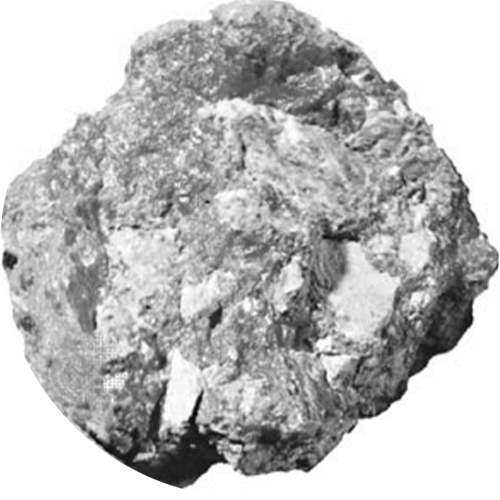
Arsenic is a semi-metallic element. Although it is rare to find pure arsenic in nature, inorganic arsenic compounds are found in complex minerals containing copper, lead, iron, nickel, cobalt, and other elements.[1] Most arsenic compounds are white powders with no odour.[2] Of all commercially traded arsenic compounds, arsenic trioxide is the most important.[1] There are numerous other synonyms and product names for arsenic; see the Hazardous Substances Data Bank (HSDB) for more information.[3,4]
In both Monograph Volumes 23 and 84 of the International Agency for Research on Cancer (IARC), arsenic and its compounds were classified as Group 1, carcinogenic to humans. IARC’s Volume 100 review of Group 1 carcinogens in 2012 reaffirmed this classification.[5] The evaluation applies to the whole group of arsenic compounds, not necessarily to each individual compound.[3] Epidemiologic studies in occupational settings established a strong association between inhalation exposure to arsenic and lung cancer, particularly in smelting and mining industries.[2] Long-term exposure to arsenic through ingestion (i.e. medicinally, via drinking water) can cause skin cancer.[1] There is also sufficient evidence that inorganic arsenic compounds cause urinary bladder cancer.[5] Other cancer sites associated with arsenic exposure include the liver, kidney, and prostate.[5]
Chronic ingestion of arsenic is characterized by discoloured and thickened skin on hands and feet,[6] which often precedes malignancy.[2] Neurological changes including peripheral neuropathies are also reported from low dose, chronic exposure to arsenic.[2] Because of its effectiveness as a poison, there is well established data on acute exposure to arsenic resulting in death; this includes respiratory, kidney, and cardiovascular damage, as well as haematological changes.[2]
Regulations and Guidelines
Occupational exposure limits (OEL)[7,8,9,10,11,12,13,14,15,16,17,18,19,20,21]
| Canadian Jurisdictions | Substance | OEL |
|---|---|---|
| Canada Labour Code | Arsenic Arsine | 0.01 mg/m3 [bei] 0.005 ppm |
| AB, NB | Arsenic Arsine | 0.01 mg/m3 0.05 ppm |
| BC | Arsenic Arsine | 0.01 mg/m3 0.005 ppm |
| MB, NL, PEI, NS | Arsenic Arsine | 0.01 mg/m3 [bei] 0.005 ppm |
| ON | Arsenic Arsine | 0.01 mg/m3, 0.05 mg/m3 [stel] 0.005 ppm |
| QC | Arsenic Arsine | 0.1 mg/m3 0.05 ppm |
| SK, NT, NU | Arsenic Arsine | 0.01 mg/m3, 0.03 mg/m3 [stel] 0.05 ppm, 0.15 ppm [stel] |
| YT | Arsenic Arsine | 0.5 mg/m3, 0.5 mg/m3 [stel] 0.05 ppm, 0.05 ppm [stel] |
| Other Jurisdiction | Substance | OEL |
| ACGIH 2020 TLV | Arsenic Arsine | 0.01 mg/m3 [bei] 0.005 ppm |
Arsine = gaseous arsenic trihydride
bei = Jursidiction also has a biological exposure index
mg/m3 = milligrams per cubic meter
ppm = parts per million
stel = short term exposure limit (15 min. maximum)
ACGIH = American Conference of Governmental Industrial Hygienists
TLV = threshold limit value
Canadian environmental guidelines and standards*
| Jurisdiction | Limit | Year |
|---|---|---|
| Drinking Water Guidelines (Canada, BC, MB) and Standards (ON, QC, SK) | 0.010 mg/L, ALARA | 2006-2020 [22,23,24,25,26,27] |
| Alberta Ambient Air Quality Objectives | Annual: 0.01 µg/m3 1-hour: 0.1 µg/m3 | 2017[28] |
| Manitoba Ambient Air Quality Guideline | 24-hour: 0.3 µg/m3 | 2005[29] |
| Ontario Ambient Air Quality Criteria | 24-hour: 0.3 µg/m3 | 2016[30] |
| Canadian Soil Quality Guidelines for Environmental Health | 12 ppm | 1997[31] |
| Quebec’s Clean Air Regulation | 1 year limit: 0.003 µg/m3; Prohibited discharge into the air if the concentration of arsenic exceeds the standard | 2011[32] |
| BC’s Contaminated Sites Regulation, BC Reg 375/96 | Sets soil standards for the protection of human health: Agricultural and low density residential sites: 20 μg/g Urban park and high density residential sites: 40 μg/g Commercial sites: 150 μg/g Industrial sites: 400 μg/g
Drinking water: 10 µg/L | 2016[33] |
| List of contaminants and other adulterating substances in foods | Maximum levels for total arsenic: Fish protein: 3.5 ppm Edible bone meal: 1 ppm Beverages, fruit juice, fruit nectar: 0.1 ppm applied to products as consumed Water in sealed containers: 0.01 ppm
Maximum levels for asrenic, inorganic: | 2020[34] |
*Standards are legislated and legally enforceable, while guidelines (including Ontario ambient air quality criteria) describe concentrations of contaminants in the environment (e.g. air, water) that are protective against adverse health, environmental, or aesthetic (e.g. odour) effects
Canadian agencies/organizations
| Agency | Designation/Position | Year (ref) |
|---|---|---|
| Health Canada | DSL – low priority substance (already risk managed) | 2006[35] |
| CEPA | Schedule 1 and 6, paragraphs ‘b’ and ‘c’ | 2011[36] |
| National Classification System for Contaminated Sites | Rank: “High hazard” | 2008[37] |
| Cosmetic Ingredient Hotlist | Not permitted | 2004[38] |
| National Pollutant Release Inventory (NPRI) Substance List | NPRI Part (Threshold Category): 1B, Reportable to NPRI if manufactured, processed, or otherwise used at quantities greater than: 50 kg . Total of the pure element and the equivalent weight of the element contained in any cound, alloy or mixture. | 2016[39] |
DSL = Domestic Substance List
CEPA = Canadian Environmental Protection Act
Arsenic was not included in other Canadian government guidelines, standards, or chemical listings reviewed.
Main Uses
The major use for arsenic has been for chromated copper arsenate (CCA) in the wood preservation industry. In recent years, however, use patterns have changed.[40]
In December 2003, a voluntary agreement was made in the United States and Canada to stop using CCA in wood for residential applications, including play structures, decks, fencing, and boardwalks.[41] Prior to 2004, 90% of arsenic consumption in the US was for pressure treated wood; the figure reported for 2007 was 50%.[40] Marine timbers, plywood flooring and roofing, utility poles, and glue-laminated beams can still be treated with CCA.
There are several other current uses of arsenic. In the metallurgical industry, arsenic is used to harden copper and lead-antimony alloys; applications include ammunitions, solders, battery posts, bearings, and lead shot.[40] In glassmaking, arsenic is used to disperse bubbles or for colour.[2] In the semiconductor industry, high-purity arsenic is used in applications such as solar cells, light emitting diodes, lasers, and integrated circuits.[1]
Historically, arsenic has been included in agricultural chemicals, either directly or after conversion to arsenic acid, and was widely used as a pesticide and fertilizer. This is generally no longer permitted,[2] though arsenicals may be used in emergency situations (e.g. pine beetle infestation).[42] Until the 1970s, arsenic was used to treat leukemia, psoriasis, and asthma.[1] In the 1990s, there was renewed interest in using arsenic to treat a specific type of leukemia.[2]
Canadian Production and Trade
Arsenic is obtained as a byproduct of the smelting of copper, lead, cobalt, and gold ores.[43] In 2009, Hudson Bay Mining and Smelting was the base metal smelter with the largest emissions of arsenic in Canada accounting for 38% of emissions.[44] Other Canadian base metal smelters and refineries that produced and emitted arsenic in 2009 include: Vale Canada Ltd.-Copper Cliff, Vale Canada Ltd.-Thompson, Xstrata Copper-Horne, and Xstrata Copper-CCR.[44] From 2005 to 2019, there was a 54% reduction (38t) in arsenic emissions from base metals smelters and refineries.[45]
Production and trade
| Activity | Quantity | Year |
|---|---|---|
| Export | None | 2015[35] |
| Import | 58 t of ‘arsenic’ | 2015[35] |
t = tonne
Environmental Exposures Overview
Consuming arsenic through food is generally considered the primary route of exposure for the general population, although drinking water can also be a significant source in areas where arsenic is found in bedrock (thus contaminating drinking water sources).[46] Areas in Canada with arsenic-rich geologic deposits include the Yukon, Northern British Columbia (B.C.), Nunavut Islands, the Atlantic coast, and few hot spots in Southern Ontario.[47] CAREX Canada’s environmental estimates indicate that arsenic levels in Canadian drinking water result in higher risks of cancer at a population level (moderate data quality). Estimates for food and beverages show that arsenic exposure also results in an increased risk via this route (low data quality).
Quantifying the relative contribution of food and drinking water is difficult because arsenic uptake varies based on the form (i.e. organic or inorganic) and valence state of arsenic.[48] Based on limited available research,[49,50] intake of inorganic arsenic, which is considered more toxic, is estimated at 25% of total arsenic intake. In Canada, sources of arsenic in food include shellfish, meat, poultry, grain, and dairy products.[51] Arsenic has been found in bioaccessible forms (i.e. that can be readily absorbed) in Canadian wild plants and game, including berries, mushrooms, and hares.[52] In Ontario, 84% of the daily intake of arsenic was estimated to come from food, 15% from water, less than 1% from soils/dusts, and a negligible amount from skin contact.[51] This trend should be relatively similar across Canada. Arsenic in pigments and paints may be ingested through contaminated hands, fingernails, food, cups, or cigarettes.[1]
The average arsenic concentration in ambient air in 11 Canadian cities and one rural site in 1990 was 0.001 µg/m3.[48] Weathering and erosion of arsenic-containing rocks and soils contributes to natural levels of arsenic in the environment, however anthropogenic sources are the most significant contributors. Examples include mining base-metals and producing gold;[53] burning waste and coal;[54] leaching from arsenic treated sawdust and wood, or smoke from treated wood;[1] and applying arsenic-based pesticides.[55] Monosodium methanearsonate (MSMA), an arsenic-containing pesticide, was used in B.C. forests from 1995-2004 in an attempt to slow the pine beetle infestation.[40] When arsenic accumulation and behavioural changes in woodpeckers and other insect-feeding species were observed, MSMA was removed from B.C. markets.[56]
Some Canadian sites with high arsenic levels from mining/smelting residues include Moira Lake, ON, Yellowknife, NT, Bathurst, NB, and Rabbit Lake, SK.[55] Samples taken recently near Sydney, NS found 20% of background soil samples and 95% of tar pond soil samples were above Canadian health-based guidelines for arsenic in soil .[57]
Searches of Environment Canada’s National Pollutant Release Inventory (NPRI) and the US Consumer Product Information Database yielded the following results on current potential for exposure to arsenic in Canada:
NPRI and US Consumer Product Information Database
| NPRI 2015[58] | ||
|---|---|---|
| Substance name: ‘Arsenic’ | ||
| Category | Quantity | Industry |
| Released into Environment | 152 t | Foundries, Non-ferrous metal (except aluminum) production and processing, metal ore mining (272 facilities) |
| Disposed of | 23,889 t | |
| Sent to off-site recycling | 473 t | |
| US Consumer Products 2015[59] | ||
|---|---|---|
| Search Term | Quantity | Product Type |
| ‘Arsenic’ | 6 | Gear and motor oils (4), cement colorant (1), pet care lotion(1) |
t = tonne
For more information, see the environmental exposure estimate for arsenic.
Occupational Exposures Overview
Inhalation and dermal contact are the most important routes of occupational exposure.[1]
CAREX Canada estimates that approximately 22,000 Canadians are exposed to arsenic at work; about half are exposed due to the use of arsenic in CCA wood preservatives. The industries with the highest number of exposed workers are foundation, structure, and building exterior contractors, non-residential building construction, and farms. These workers are primarily exposed to arsenic through CCA treated wood. The occupations with the most workers exposed include construction trades helpers and labourers, carpenters, machinists and machining and tooling inspectors, and contractors and supervisors, carpentry trades.
According to the Burden of Occupational Cancer in Canada project, occupational exposure to arsenic compounds leads to approximately 60 lung cancers each year in Canada, based on past exposures (1961-2001).[60,61] This amounts to 0.3% of all lung cancers diagnosed annually. Most arsenic-related cancers occur among workers in the manufacturing and construction sectors.[61]
For more information, see the occupational exposure estimate for arsenic.
Sources
Other Resources
- Leonardi G, Vahter M, Clemens F, Goessler W, Gurzau E, Hemminki K, Hough R, Koppova K, Kumar R, Rudnai P, Surdu S, Fletcher T. “Inorganic Arsenic and Basal Cell Carcinoma in Areas of Hungary, Romani, and Slovakia: A Case-Control Study.”Environ Health Perspect 2012; 120(5): 721-726
- US Environmental Protection Agency (EPA). Drinking Water Requirements for States and Public Water Systems
- Decke P, Cohen B, Butala J, Gordon T. “Exposure to Wood Dust and Heavy Metals in Workers Using CCA Pressure-Treated Wood.” Am Ind Hyg Assoc J 2002;63(2):166171.
Subscribe to our newsletters
The CAREX Canada team offers two regular newsletters: the biannual e-Bulletin summarizing information on upcoming webinars, new publications, and updates to estimates and tools; and the monthly Carcinogens in the News, a digest of media articles, government reports, and academic literature related to the carcinogens we’ve classified as important for surveillance in Canada. Sign up for one or both of these newsletters below.
CAREX Canada
School of Population and Public Health
University of British Columbia
Vancouver Campus
370A - 2206 East Mall
Vancouver, BC V6T 1Z3
CANADA


As a national organization, our work extends across borders into many Indigenous lands throughout Canada. We gratefully acknowledge that our host institution, the University of British Columbia Point Grey campus, is located on the traditional, ancestral, and unceded territories of the xʷməθkʷəy̓əm (Musqueam) people.